Every historic roofline tells a story before a visitor steps through the door. Cornices whisper about craft guilds, dormers frame the skies, and someplace above everything, a finial holds the last note. When that final note prove out, the whole composition feels inevitable, as if the building can not have been made differently. When it sounds false, also the most mindful remediation starts to feel vague around the edges. Finials are little in profile yet considerable in significance, and custom job is frequently the only method to attain the type of accuracy that skilled preservationists and critical house owners expect.
The language of finials
A finial lives at the end of a line, like spelling. Spires, gables, domes, cupolas, and dormer peaks each take their hint from age, area, and contractor. Gothic Revival prefers dizzy types, pierced and spired, in some cases with crockets that echo climbing foliage. Second Empire and French Diverse work usually flexes towards bulbous profiles and flared skirts, indicated to balance the weight of slate mansards. Queen Anne prefers lively silhouettes, with turned newel themes that reference the turret work seen on patios and stairway components. Colonial Rebirth tends towards restriction, crisp containers and spears with symmetrical technique. Even the Arts and Crafts activity, questionable of accessory for accessory's sake, still embraced low, honest finials that finish a ridge with silent integrity.
Period-correct finials are not just about synopsis. Percentage matters. A finial that is fifteen percent also high can make a ridge appearance spindly. One that is a few inches also short will certainly check out like a missing out on cap. Over many years defining and mounting custom finials, I have actually located a trusted rule of thumb: gauge the visual area, not just the physical measurement. Sightlines from the ground, the range to the street, tree cover, and the pitch of the roof change exactly how an item checks out. A twelve-inch distinction on a tall spire can go away against the skies. On a reduced gable, half that is the difference in between elegant and apologetic.
Reading the archive and checking out the roof
The most successful restorations begin with inquisitiveness. Initial plans rarely make it through, yet photographs, tax documents, Sanborn maps, and close-by contemporaries frequently do. Before we sketch anything, we walk the neighborhood with a lengthy lens, scanning kindred roofing systems for ideas. A finial seldom exists in isolation, it belongs to a pattern vocabulary. If the street carries a run of 1890s Queen Anne homes, you can anticipate proportionally comparable finials, regular metal options, and common themes. Even towns left fingerprints, like the two-pointed dart finials popular partly of Pennsylvania that echoed neighborhood climate vane patterns.
We likewise reviewed the roof itself. Slate roofing contractors in the 1880s cut keystone slates at hips in different ways than their 1920s followers, and those information affect the base plate you create for a finial. A copper ridge roll modifications how water actions. If that ridge hides a continual vent, the finial have to arrive at obstructing that avoids piercing the vent tooth cavity. These are not academic concerns. I have actually seen a well-meaning installer drive lag screws via a brand-new ridge vent, then invest a day backtracking a mysterious leak that just appeared with a north wind. Sychronisation with Customized Roof Vents saves rework, and a purpose-built finial base can extend air vent openings without compromise.
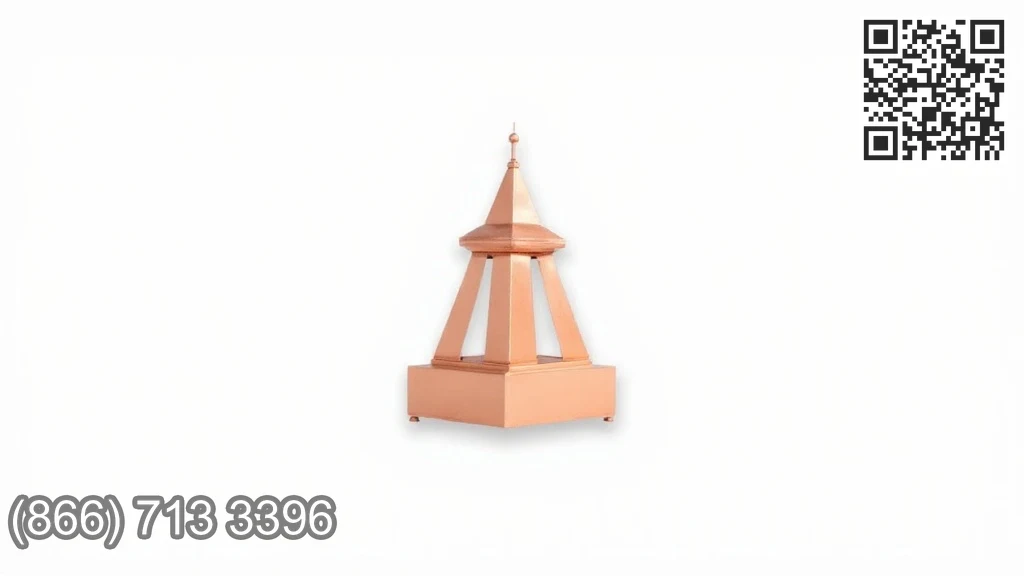
Material realities: copper, zinc, and beyond
Finials sustain weather condition at the most unveiled part of a structure. That solitary fact puts product option at the heart of the discussion. Copper remains the default permanently reasons. It creates a protective oxide, takes solder wonderfully, and can be annealed and benefited complicated curves without tiredness. Incomplete copper develops with cinnamon, umber, and lastly to a peaceful eco-friendly over 15 to 30 years depending upon your environment and air high quality. Patina is not just aesthetic, it is safety, and a well-detailed copper finial on a slate or clay floor tile roofing system will outlast the following two paint cycles, often much more.
Zinc provides a cooler, silvery gray that balances with rock and leaded glass. Its natural aging is quicker, and it sets handsomely with limestone cornices on Beaux-Arts or Timeless Rebirth work. The compromise is developing problem on tight radii and a need for accurate thermal movement describing. Lead covered copper bridges the visual gap, offering the versatility and solderability of copper with a matte gray finish that mimics old lead without its health and wellness concerns.
For repainted practices, like certain Georgian and Federal analyses, galvanized steel with a high-build architectural finishing can look traditionally proper at a lower cost. If you head that direction, define G90 or greater galvanizing and a factory-baked fluoropolymer coating. Field-painting a finial after installment is a false economic climate. Overspray on slate looks like overlook, and brush marks announce themselves from the sidewalk when the sunlight is low.
Specialty alloys and woods have their area. I have replaced decomposed cypress finials on 19th-century cupolas where the objective was to maintain the wood practice. We encased the brand-new turned wood core with hand-soldered copper skirts at water-shedding transitions, then painted the revealed timber with a breathable linseed oil system. Perfectionists may argue for full timber, yet the hybrid kept the profile crisp and the maintenance foreseeable. When doubtful, consider what the initial home builder would have made with the devices and expertise we have now, not as an anachronism yet as an extension of good craft.
Proportion, profile, and the art of restraint
Most customers show up with a photo. The discussion typically begins with form and finishes with scale. To obtain scale right, we simulated in 3 dimensions. Cardboard is underrated. On a three-story Victorian, a full-size cardboard shape held on a post can save weeks of regret. We do this on tranquil mornings, readjust in two-inch increments, and take pictures from the road, the side yard, and the far corner. The eye lies when you stand too close to a tall roof covering, and a video camera at 5 feet 6 inches off quality levels most owners will certainly live with.
Profiles that consist of bulbs, apexes, darts, and fleur-de-lis require greater than a quite contour. Mechanical stamina conceals beneath elegance. A slim spire may need a thicker core or concealed pole to withstand wind. Skirts need to drop water without producing capillary catches where ice can tear solder joints apart. Throughout the years, I have actually discovered to soften transitions at half-rounds and to prevent knife-edges. They look sharp theoretically, after that babble under a tinsmith's risk, and finally catch winter season in an environment that cycles ice up and thaw 10 times in a week. One of the most extravagant detail is one that still looks unavoidable a years later.
Mounting without compromise
A finial's poise is only as reliable as its anchorage. Historic roofings make complex accessories. Slate can not be strolled on delicately, clay ceramic tiles fracture under point loads, and most modern-day membranes dislike punctures. A customized base plate is not a luxury thing, it is the technique. We theme the roofing system pitch and the ridge size, then fabricate a base that disperses tons to structure with marginal penetrations. Stainless-steel bolts, extra-large neoprene washing machines seated in butyl, and a firm counterflashing skirt job as a silent team. On projects with Customized Snow Guards upstream of the finial, we usually collaborate spacing so sliding snow never ever lots the finial directly. Thirty pounds per square foot of damp snow moving at the incorrect minute will certainly do what physics dictates.
Cupolas and dormers include their very own twists. Personalized cupolas usually arrive as building gems that should have a finial scaled to their lantern's muntin pattern, not the roof covering past. I have actually matched finial bases to concealed steel plates inside a cupola framework, so wind tons bypasses delicate sash totally. On Customized Dormers, particularly eyebrow and segmental kinds, you gain little by landing a finial dead center if the dormer's framing does not supply obstructing there. A few inches toward a stud bay can be the distinction between a safe and secure installation and a ceiling repair inside your home after the first gale.
Patterns, spreading, and the craft of replication
Many historic finials were cast in iron, zinc, or structure metals, then painted. Others were developed from flat steel and soldered. When replicating a specific historical item, we begin with determined drawings and, when possible, a physical mold. Silicone molding of a making it through ornament enables accurate pattern making. The foundry then gathers an alloy specified for outdoor responsibility, which we later on sheath or cap where water would otherwise rest. Cast components provide crisp information on small motifs like acanthus leaves and rosettes, yet they likewise require thoughtful isolation from dissimilar steels to prevent galvanic deterioration. A slim nylon or EPDM washing machine is cost-effective insurance.
Sheet-metal finials, the stock-in-trade of companies like Salvo Metal Works and other specialty shops, stand out for big types. Hemmed sides, standing seams on long cones, and sweat-soldered joints enable repair decades later without taking down the whole setting up. For collectors that possess houses in coastal areas, we take on a belt-and-suspenders approach: marine-grade sealants at infiltrations, much more charitable drip sides, and, when suitable, silicon bronze or 316 stainless rods and bolts. Salt air does not negotiate.
The coating that time deserves
One temptation ought to be resisted: false aging as a faster way to gravitas. Chemical patination can look good-looking in the initial period if carried out by a competent finisher who recognizes on-site handling, yet it should be straightforward regarding its intent. Real weathering is uneven. Caps see more sun and bleach out. North faces go dull more quickly. If a customer seeks a surface that feels picked day one, I suggest a subtler strategy. Pre-patinated copper, thoroughly dealt with to avoid fingerprints, then permitted to continue its trip on the roofing system, reads as confidence as opposed to costume.
Paint belongs where background welcomes it. On a Georgian resurgence with white-trimmed cornices and a painted climate vane, a repainted finial connections the ensemble together. Use a system that respects development and contraction. Guides ought to bite into metal chemically, overcoats should stay flexible, and every side must be back-primed prior to setting up. Repaint fails first at seams and edges where movie constructs very finely. A little span on edges pays dividends you will certainly never ever see however will constantly enjoy.
The silent duty of water
Every decorative choice on a roof is a water decision. Finials should avoid developing bowls, shelves, or reverse inclines. The base must consist of a kicked blinking that moves water far from bolts. Soldered joints need to be oriented so their laps deal with leeward. Rivets are trusted, but they make tiny mugs if placed encountering uphill. A bead of butyl or a ring of closed-cell foam underneath a washing machine is economical grace. One winter months, a job with Personalized Leader Boxes and brand-new half-round seamless gutters exposed a lesson in microclimates. Meltwater refroze along a shadow line, developed a little ridge of ice that pushed meltwater toward a finial base, then under a slate. The repair was not at the finial. We readjusted the surrounding copper snow fencing by 2 courses and the trouble evaporated. The moral: water finds the course of the very least resistance, not the path you intended.
Integrating finials with the broader composition
Finials do their ideal work when the remainder of the roof covering ensemble supports them. Customized Chimney Shrouds with mild crown accounts, Customized Roof Vents that obtain the roofing's pitch and joint language, and Customized Leader Boxes with proportional faces all add to a whole that feels composed. I when worked on a Romanesque Resurgence rectory where the chimney pots were wonderful, tall clay cylinders with rolled lips. The finials on the gable ends looked frail alongside them. We commissioned new copper finials that echoed the chimney pot's span in the light bulb and repeated the pot's roll as a hem at the finial skirt. Nothing altered structurally, yet the structure seemed to pull itself together over night. Architectural precision is usually about repeating concepts at different ranges up until the structure hums.
Cupolas are worthy of special focus. On a Shingle Design home in seaside Maine, the existing cupola had a picky light weight aluminum weather vane and a thin base. We eliminated it, produced a new wood-and-copper cupola scaled to the ridge deepness, then crowned it with a restrained spear finial in lead layered copper. The brand-new piece pulled the lengthy roof with each other and silenced the sky line. The property owner later claimed the house appeared it had finally exhaled.
When not to match
Purists sometimes bristle at the pointer that a new finial ought to not imitate the old exactly. There are great factors to deviate. Security and codes intervene. Lightning defense might require a hidden bonding point, which alters an apex's core. Seismic areas request for even more durable anchorage. Wild animals can force detail adjustments. A set of red-tailed hawks transformed a tall finial into a perch that developed a mess down the main entry course. We modified the leading profile with a subtle sphere that discouraged standing and solved the issue without anyone seeing the change.
Budget can be a sincere restraint. Not every job bears the cost of cast replication or hand-raised accounts. In those cases, a simplified silhouette with thoroughly chosen percentages achieves dignity without pretense. I encourage clients to spend where the eye remains. If your front gable has the street, spend there, and match less noticeable second ridges with less complex caps. High-end is not unlimited investing, it is smart appropriation that leaves no part of the structure embarrassed.
Measuring success over time
A finial is a 30-year, 60-year, often 100-year decision. You gauge success in silence, the absence of callbacks, the method neighbors stop discovering the roofing because it looks like it constantly belonged. Precautionary treatment is very little when the style is right. Once in a while, prepare a https://ameblo.jp/andykegb540/entry-12965370476.html roof walk with a lift, not a ladder on slate. Look for loosened up set screws on lightning factors, hairline fractures at firm joints after severe winters, and the condition of sealant at infiltrations. A five-minute evaluation conserves a Saturday throughout a thunderstorm.

Owners typically ask when a patina will transform. In a city with traffic, expect copper to smooth within 2 to 5 years, after that go for a decade prior to environment-friendly flowers along drip edges. Near salt air, eco-friendlies arrive quicker, deep browns hold on indirectly. Under heavy tree cover, aging slows and grows lichen. That can be lovely or not, depending on context. For official homes going for crispness, a mild yearly rinse, nothing aggressive, helps. Do not power clean a finial. You would certainly marvel how many otherwise mindful individuals do.
Collaboration and the worth of a specialist
Custom Finials link disciplines: design sensibility, metalsmithing, roof covering scientific research, and functional installation. Shops that reside in this junction, like Salvo Metal Works and peers throughout the country, bring greater than devices. They bring institutional memory. They bear in mind that a 1906 Dutch Colonial in a particular area made use of smaller-diameter apex poles since local blacksmiths stocked that size. They understand just how snow behaves on a 9-in-12 slate roof in Vermont and what that indicates for Custom Snow Guards upstream of the finial. They sketch quickly, yet they prototype patiently. Excellent partnership conserves effort later.
For engineers and professionals, the most effective sequence is straightforward. Involve the finial fabricator while you are still mapping out roofing information. Share ridge and hip information, waterproofing methods, and any prepare for Customized Dormers, Personalized Smokeshaft Shrouds, or Customized Roof covering Vents that might influence accessory points. Settle on a mockup approach. Decide whether on-site soldering is acceptable or if assembly must be totally shop-complete. Establish crane or lift gain access to early. A finial that can not clear the tree cover becomes an uncomfortable dance on installation day.
A short field guide to getting it right
The topic withstands checklists, but a portable list can sharpen decisions without swiping nuance.
- Verify the age, design, and regional patterns with images and close-by examples prior to drawing profiles. Mock full range a minimum of as soon as, from actual ground sightlines, and adjust height in tiny increments. Choose products for both aesthetics and upkeep facts in your environment, copper when in doubt. Detail the base and flashing as water-management gadgets first, ornament second. Coordinate with adjacent roof covering elements, particularly snow retention and ridge venting, so the finial is celebrated, not sacrificed.
Stories from the scaffold
A couple of minutes remain that discuss better than concept why personalized matters. Years earlier, we brought back a turret on a block Queen Anne with a slate roof that hopped via a century of repairs. The original finial had disappeared throughout a 1950s renovation spree, changed with a tv antenna that looked like a layer shelf for crows. The proprietor wished to recognize your home without claiming it was a gallery. We laid out a finial that grabbed the turret's turned timber brackets, echoed them in steel with a refined bead, after that lifted into a double-bulb profile topped with a slim spear. The day we set it, the next-door neighbor across the street came out and stared for a long min. He stated it resembled your home was standing straighter. That is the mark of fit.
Another project brought a sad lesson. We copied a 1910 copper finial precisely, to a razor-thin edge at the reduced skirt that made the old piece gleam greatly in archival pictures. Within two winters the brand-new edge work rippled slightly under heavy rime ice. The eye hardly observed, yet an artisan recoils at a surge where a curve need to sing. We transformed our detail afterwards, easing that intensity into a half-millimeter distance. Appeal likes bravado, yet buildings reward prudence.
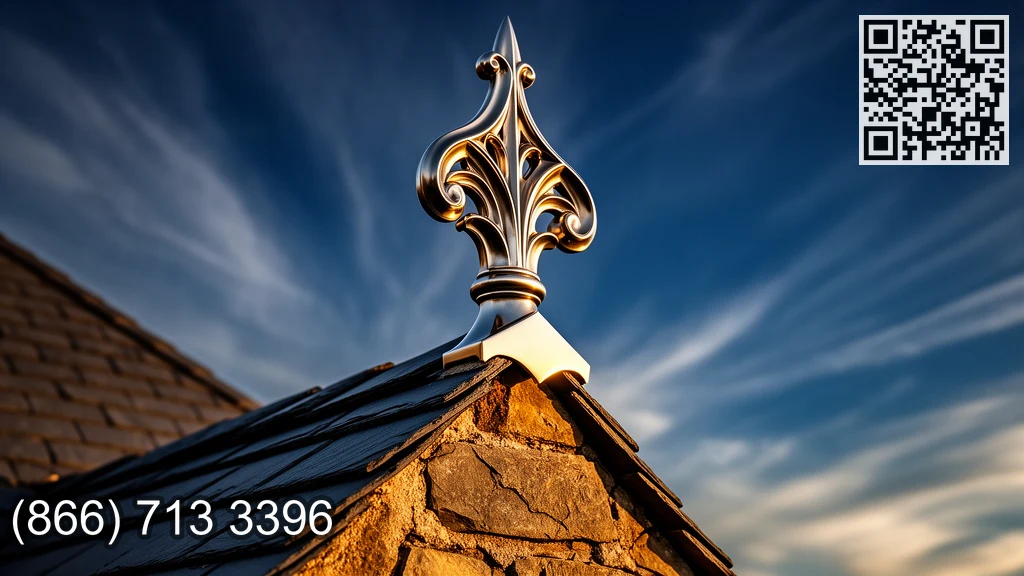
The deluxe of fidelity
Luxury in architecture is not accessory alone, it is the calmness that arrives when every component feels inescapable. A finial that honors its period, material, and environment does not attract attention like a gem. It completes a sentence. The financial investment is modest contrasted to cooking areas and bathrooms, yet its effect radiates external, maintaining the building's expression. Succeeded, it also shields, relocating water where it ought to go, surviving wind that would snap a minimal item away, and sustaining the allied components around it, from Custom-made Leader Boxes that keep wall surfaces dry to Personalized cupolas that ventilate quietly without a plastic note in sight.
Architectural precision is not nostalgia. It is a promise maintained between the past and the future, that the language of a location will be talked clearly while we are its stewards. The crowning touch on a roofline keeps that assurance where the skies can see it.